
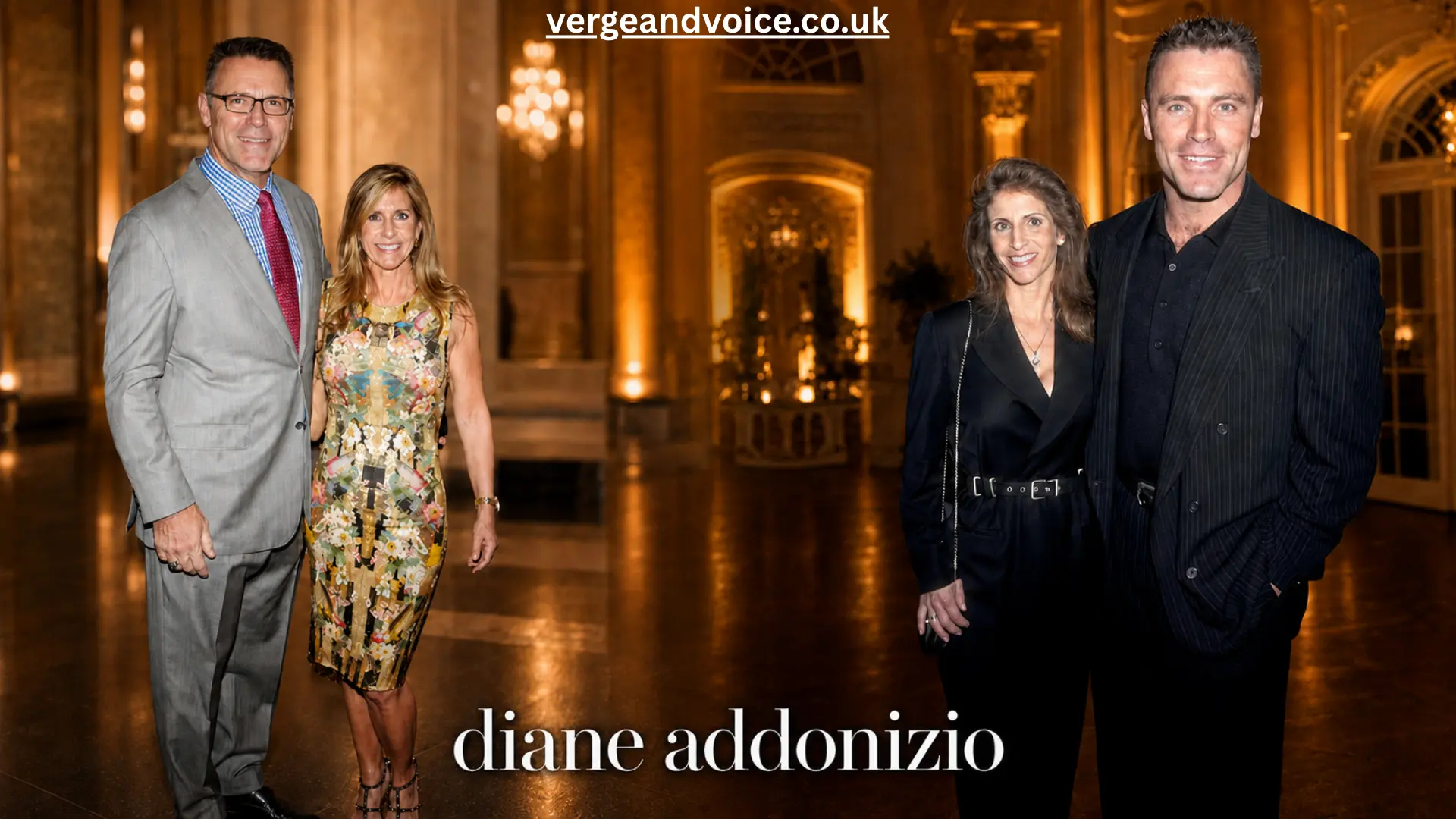
Diane Addonizio has a documented connection with Villanova University that extends from her education to substantial support for its students. In 2015, she and her husband, Howie Long, jointly committed $1 million to an athletics-facility project at the university.
The contribution was not Diane’s first verified act of support for Villanova. The couple had previously established a scholarship endowment in 1994. Her own history with the institution began much earlier: she graduated with a degree in Classical Studies in 1982 before completing her legal education in California.
Official university records and Diane’s direct interview remarks provide a clearer account of her background than the many unsupported profiles published about her online. They establish her academic training, several years of legal practice, and a lasting association with the university where she met Howie.
The $1 Million Commitment to Villanova
Villanova announced the joint commitment from Diane Addonizio and Howie Long on 9 June 2015. The $1 million contribution formed part of the university’s wider fundraising campaign and supported a building project connected with Villanova Stadium.
The planned facility was intended to provide a new home for the football programme as well as training resources for athletes across Villanova’s 24 varsity sports. Its proposed spaces included a central athletic training area, a football locker room, coaches’ offices and a dedicated strength-training centre.
Diane and Howie provided a joint statement when the university announced their contribution. They described themselves as proud members of the Villanova community and said the institution had positively influenced their lives.
They also explained that the gift was a way to express their gratitude and join people working to improve the experiences of future Villanova athletes and members of the wider university community. Because these remarks were issued jointly, they represent the couple’s shared explanation rather than a statement made by Diane alone.
Although the strength-training space was named after Howie, Villanova consistently identified the $1 million commitment as a contribution from both of them. Diane’s participation is therefore part of the university’s official account of the project.
The Facility Their Contribution Helped Support
Construction on the West End Zone project began in 2015. The development expanded the Jake Nevin Field House and brought several athletic functions together in one facility.
A central component was the Howie Long Strength Training Center. Villanova later described it as a two-storey, 10,000-square-foot space designed to give athletes from all 24 varsity programmes room to train for collegiate competition.
The project reached another public milestone in 2016, when the new strength and conditioning centre was dedicated. Diane and Howie both attended the ceremony, according to Villanova’s official Hall of Fame profile.
Her attendance connected the original commitment with the completed facility. The available university record does not provide the exact date of the dedication, but it confirms the year, the couple’s presence and the scale of the training space.
The facility carried Howie’s name because of his place in Villanova’s football history, but the university’s announcement presented the development as a project with broader benefits. Its training resources were created for students across the entire varsity athletics programme rather than for football players alone.
An Earlier Scholarship Endowment
The 2015 contribution was part of an established relationship between the Longs and Villanova. According to the university, they had made an earlier gift in 1994 to create the Elizabeth Mullen Endowment.
The endowment provides a football scholarship for a student from an inner-city Boston school. Villanova’s account attributes the endowment to the couple jointly and does not divide responsibility between Diane and Howie.
This earlier contribution had a different purpose from the later athletics-facility commitment. The endowment provided scholarship assistance, while the $1 million gift helped improve physical resources used by Villanova athletes.
Together, the two officially documented contributions cover separate parts of the student experience: access to an educational and athletic opportunity through scholarship support, and facilities for training after arriving at the university.
Diane Addonizio’s Education and Legal Training
As a student, Diane Addonizio earned a Bachelor of Arts in Classical Studies from Villanova in 1982. She completed a Bachelor of Arts in Classical Studies in 1982, according to the university’s institutional record.
After graduating, she continued her education at the University of Southern California Gould School of Law. She earned her JD in 1986 and was admitted to the California Bar the following year.
Villanova reports that she practised law for several years after her 1987 admission. The accessible institutional information does not name her employers, clients, or precise years of practice. It also does not identify a particular legal speciality.
That distinction is important because online profiles often add more detailed professional descriptions without providing dependable evidence. The confirmed record supports referring to her legal education, bar admission,n and several years of practice. It does not establish that she specialised in corporate or civil law or managed her family’s contracts and business affairs.
Her undergraduate and postgraduate education nonetheless provide a verified professional history separate from her marriage. By the time Villanova announced the couple’s major commitment in 2015, Diane’s relationship with the university reached back more than three decades to her own graduation.
Meeting Howie Long at Villanova
Diane Addonizio first met Howie Long at Villanova during her freshman year, when he was a sophomore. In a profile originally published by Sports Illustrated on 22 July 1985, she said they met during her freshman year, when he was a sophomore.
Her direct account provides the clearest available timeline. Some later secondary profiles place their meeting during Howie’s freshman year, but Diane’s recollection specifically identifies their respective academic years.
She also shared details from their early college relationship. One of their first substantial dates involved watching a Dallas NFL game on a small black-and-white television in Howie’s room. He became excited by the action on screen, while Diane was still learning about the intensity of his interest in football.
Her recollections included a more personal example of how her understanding of him developed. She remembered feeling upset when he did not acknowledge Valentine’s Day during the early period of their relationship. She later came to understand that holidays had not carried the same meaning for him because his childhood involved moving among relatives rather than having a settled home of his own.
Diane also reflected on the support and opportunities that had helped Howie find direction. She wondered how many other capable people might never realise their potential because they did not receive similar guidance. Her observation concerned his experience rather than a formal advocacy programme of her own, but it offered a direct view of how she understood his development.
The couple married in June 1982, the same year Diane graduated from Villanova. Although many secondary profiles give 27 June as the exact date, the strongest source reviewed for their marriage confirms only the month and year.
Why Villanova Remained Important to Diane Addonizio
Diane Addonizio’s verified record with Villanova covers several distinct stages. She studied Classical Studies there, met Howie during her undergraduate years, rs and graduated in 1982. The couple later supported a scholarship endowment and helped fund a major athletics facility.
The 1994 Elizabeth Mullen Endowment and the 2015 $1 million commitment addressed different university needs. One supported a scholarship opportunity for a student from an inner-city Boston school, while the other contributed to facilities serving athletes across 24 varsity programmes.
Diane and Howie explained their reason for the later gift in their joint statement: Villanova had made a positive difference in their lives, and they wanted to help enrich the experiences of future students. Diane’s presence at the 2016 dedication also placed her at the completion of the project she had helped support.
Beyond these documented points, the reliable public record about her recent activities remains limited. No substantial new first-hand interview, professional appointment, or independent public project was identified after the facility dedication. What can be established is a long connection linking her education, legal training, and two significant periods of support for Villanova.
Fact-checking note: This profile draws on reliable sources examined and verified during research. Unsupported and unconfirmed claims were excluded.