
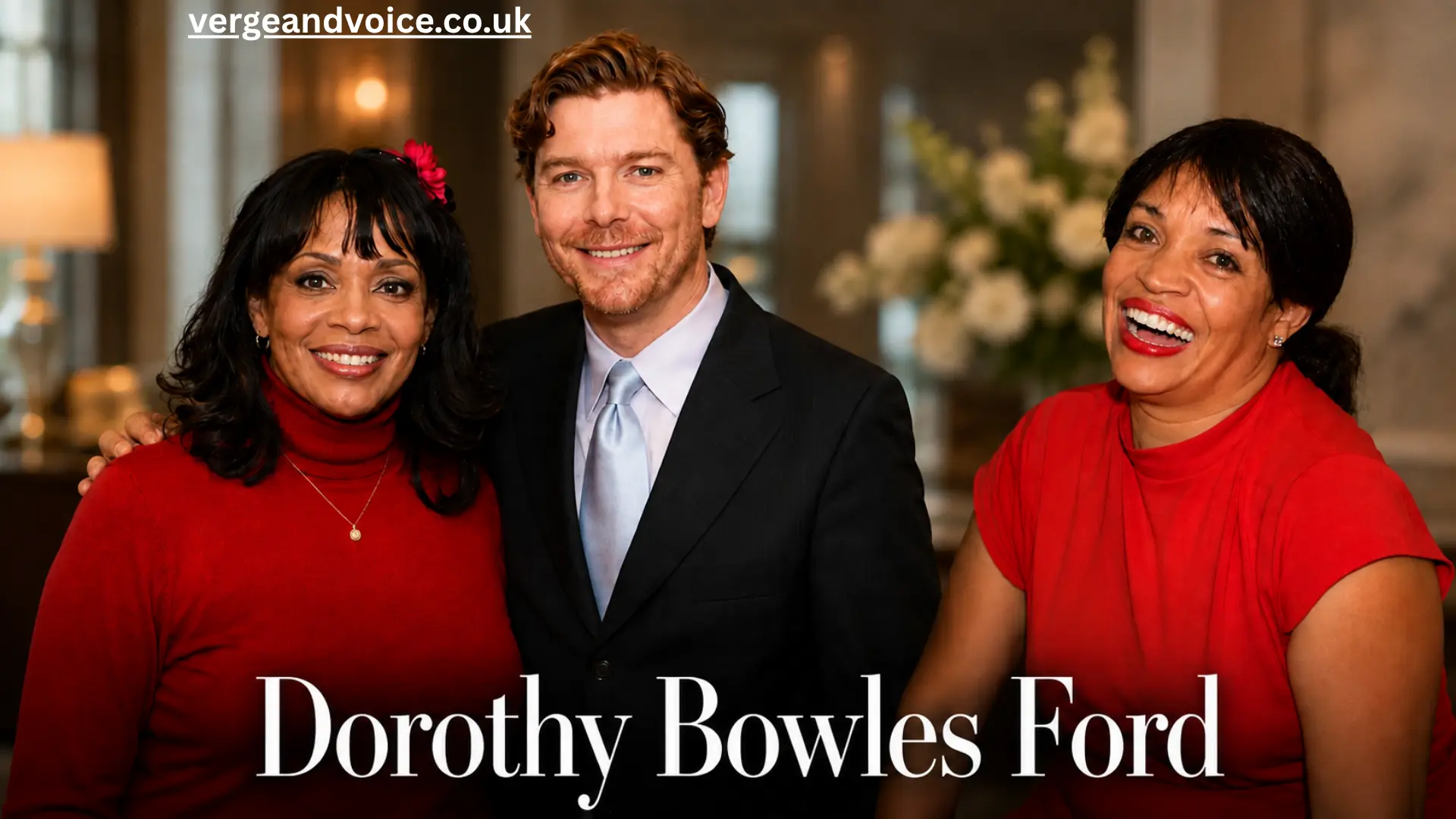
Dorothy Bowles Ford has a relatively limited public record, but the strongest available sources establish two significant roles in her own right. She was a long-time employee of the U.S. Department of Agriculture and was also listed among the Congressional Black Caucus Spouses during the 1990s.
Her documented history also intersects with the Ford family’s long-standing involvement in Tennessee politics and the U.S. Congress. Dorothy married Harold E. Ford Sr. in 1969, and their three sons include former U.S. Representative Harold E. Ford Jr. Beyond those family connections, institutional records and a small number of direct public remarks provide a clearer picture of what can responsibly be said about Dorothy Bowles Ford without relying on unsupported online profiles.
Her Long-Term Work With the U.S. Department of Agriculture
One of the clearest facts about Dorothy’s professional life is her employment with the U.S. Department of Agriculture. The U.S. House of Representatives‘ historical record describes her as a long-time employee of the department, making this one of the strongest independently documented details about her career.
Contemporary reporting also supports that record. In 1996, when Dorothy contacted The Washington Post following Harold Ford Jr.’s election to Congress, the newspaper identified her as working at the Department of Agriculture.
The available sources do not provide her precise job title, division, starting date, or retirement date. For that reason, the safest description of her career remains the one supported by the House record: she had a long-term professional association with the USDA.
Some later online profiles have attributed other jobs to her, including work with Potomac Electric Power Company. Those claims have not been substantiated by the same level of evidence. No authoritative employment record or direct statement reviewed during the research confirmed a PEPCO position.
Her USDA career therefore stands apart from those less certain accounts. It is the best-supported professional role currently available for describing Dorothy Bowles Ford independently of her former husband’s congressional career.
Her Documented Role Among Congressional Black Caucus Spouses
Dorothy also appears in official archival material connected with the Congressional Black Caucus Foundation.
A 1991 programme listed Dorothy Bowles Ford among the Congressional Black Caucus Spouses. Her name appeared again in a 1995 programme associated with the same group. These records provide direct institutional evidence that she participated in the organisation during the period when Harold Ford Sr. was serving in Congress.
The organisation’s documented activities included education, scholarships and other community programmes involving congressional spouses.
The surviving records do not establish that Dorothy personally led every scholarship, educational programme, health initiative or community event associated with the organisation. They do, however, document her inclusion in the group across more than one year.
That distinction is important because it allows her involvement to be described accurately without turning collective organisational projects into individual achievements. Her participation in the CBC Spouses represents the second major documented public role supported by official records.
Her Place in the Ford Family’s Political History
Dorothy’s public record is closely connected with the Ford family’s political history. She married Harold E. Ford Sr. on 10 February 1969, according to the U.S. House of Representatives’ historical profile.
The couple had three sons: Harold E. Ford Jr., Newton Jake Ford, and Sir Isaac Ford. Harold Jr., born in Memphis on 11 May 1970, later entered politics and served in the U.S. House of Representatives.
The family’s connection to Washington developed during Harold Ford Sr.’s congressional career. House historians record that the family moved to Washington, D.C., in the late 1970s. The available record does not give an exact date for that move or provide a detailed account of Dorothy’s individual residential history during those years.
One family recollection attributed to Dorothy concerns Harold Jr.’s early exposure to politics. House historians report that, as a young child attending his father’s first congressional swearing-in, he raised his hand and indicated that he wanted to follow a similar path when he grew older.
The episode is preserved as a recollection from his mother rather than as a contemporary recording of the child himself. Even so, it provides a rare family perspective on Harold Jr.’s early familiarity with congressional life.
Dorothy and Harold Ford Sr. remained married for three decades before divorcing in 1999. The U.S. House historical record gives that year and cites contemporary reporting about their divorce agreement.
Although a later newspaper report casually referred to Dorothy as Harold Sr.’s wife, the stronger institutional record clearly identifies a 1999 divorce. She is therefore most accurately described as his former wife.
Her Own Public Remarks Provide Rare First-Hand Context
Dorothy Bowles Ford has not left behind a large body of readily accessible interviews, but several direct remarks provide useful first-hand context.
One came shortly after Harold Ford Jr. won election to Congress in 1996. Dorothy contacted The Washington Post concerning a photograph that showed her beside her son. In speaking with the newspaper, she expressed pride in being there with him.
That comment is useful because it records Dorothy’s own reaction to a specific family milestone. It provides first-hand evidence of her pride at the time without requiring assumptions about the wider role she may or may not have played in her son’s political development.
Another direct comment appeared in 1998 after Dorothy attended a private screening of a political satire. She told The Washington Post that she considered the film’s overall portrayal of the Black community realistic, while objecting to its depiction of very young boys carrying guns as drug couriers.
Her remarks were specific to what she had seen on screen. They give a rare example of Dorothy publicly discussing the representation of Black children and communities, but the surviving comment is too narrow to establish a broader political ideology or advocacy platform.
These statements are valuable precisely because they are attributable directly to her. They offer a firmer basis for understanding selected views and reactions than later biographies that assign personality traits or beliefs without first-hand evidence.
Later Verified Family and Public Appearances
Official records continue to provide some limited information about Dorothy after the 1990s.
A 2001 Congressional Black Caucus Foundation programme referred to her as “Dorothy Bowles Ford of Memphis.” That wording establishes a documented association with Memphis at that time. It does not establish where she lives today.
She also appeared in reputable reporting in February 2008 when she hosted a women’s tea in Bethesda, Maryland, for Harold Ford Jr.’s then-fiancée, Emily Threlkeld. Dorothy made welcoming remarks during the gathering, giving another rare example of her being directly quoted in a family setting.
The event belongs to her documented family history rather than to a separate professional role. It nevertheless provides a later public record of Dorothy participating in an important family occasion.
Reliable recent information about her present-day activities is much thinner. No substantial Dorothy-specific development was established through an authoritative organisation, institutional source, direct statement or major reputable publication in the research reviewed up to 19 August 2026.
Likewise, no authenticated personal Instagram, Facebook or X account belonging to her was identified. That absence cannot establish that she deliberately avoids social media or prefers a private lifestyle; it only means a verified personal account was not found.
Current residence, current employment,t and present-day professional or advocacy activities also remain unconfirmed. Historical records support a Memphis connection in 2001, but they do not establish where she lives now.
What the Verified Record Shows About Dorothy Bowles Ford
The strongest documented picture of Dorothy Bowles Ford comes from a relatively small group of institutional records and direct remarks rather than the much broader claims found in some secondary biographies.
Two roles stand out most clearly. She had a long-term career with the U.S. Department of Agriculture, and she was documented as a member of the Congressional Black Caucus Spouses in official programmes from 1991 and 1995.
Her history also includes a well-established connection to the Ford political family. She married Harold Ford Sr. in 1969, had three sons with him, and was present during a period in which the family became closely connected with congressional life in Washington. Their marriage ended in 1999.
A handful of her own statements add personal context without requiring speculation. She publicly expressed pride in Harold Ford Jr. following his 1996 election and later voiced concern about the portrayal of young Black boys in a film she had seen.
Beyond those points, the public record becomes far less certain. Exact age, date of birth, net worth, current residence, height, parents, siblings, present employment and current lifestyle are not supported strongly enough by the verified material reviewed here.
The most reliable account of Dorothy Bowles Ford is therefore not one built around unconfirmed personal statistics. It is centred on the professional, organisational and family roles that can be traced to institutional records and her own documented remarks.
Fact-checking note: This profile was prepared from the verified sources reviewed during the research process. Unsupported and unconfirmed claims were excluded.