
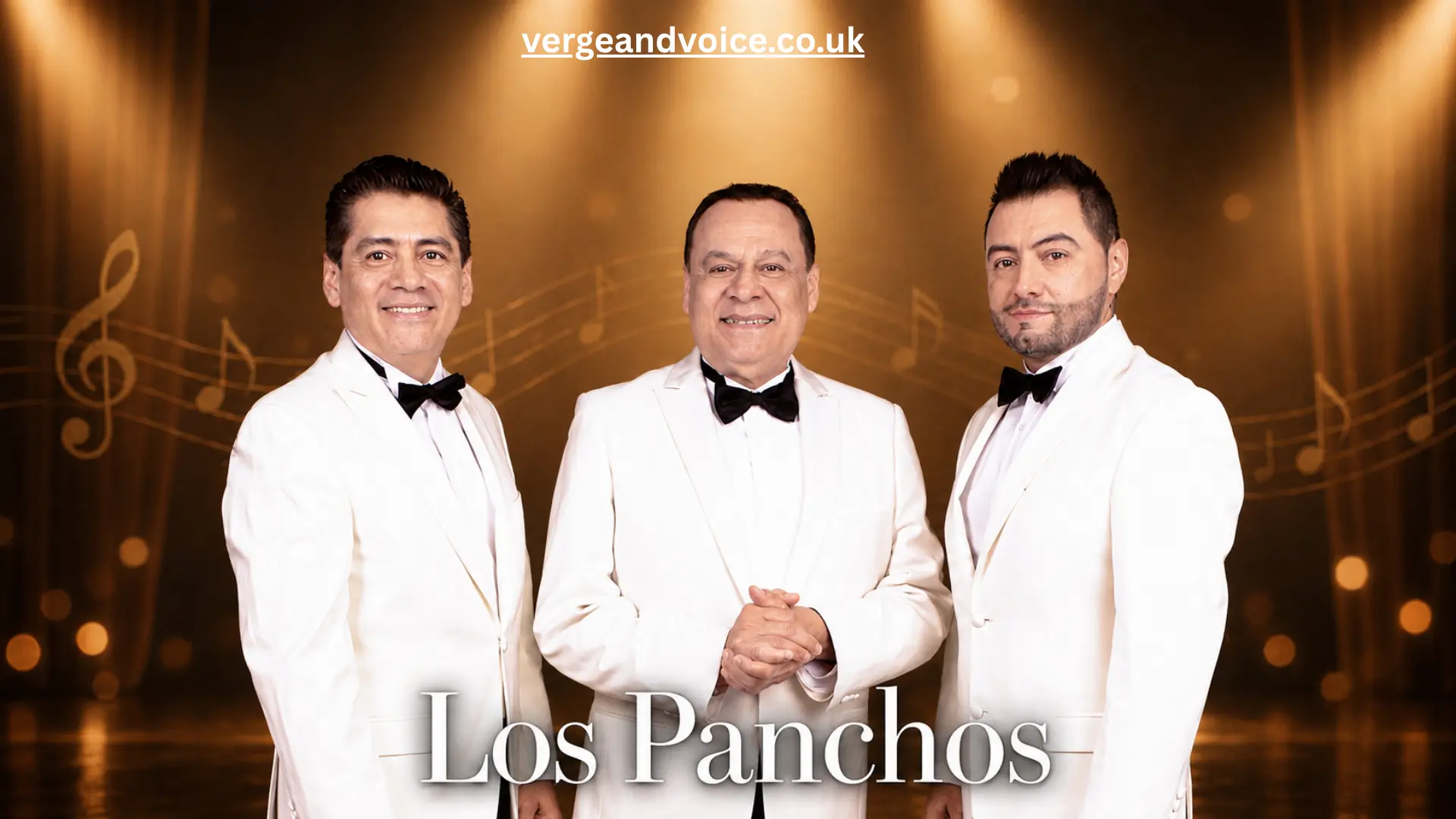
Los Panchos emerged in New York City in 1944 and developed a three-voice, guitar-led approach that became closely associated with romantic bolero. The original trio brought together Mexican musicians Alfredo Gil and Jesús Chucho Navarro with Puerto Rican singer and guitarist Hernando Avilés, creating a cross-border collaboration that would reach audiences well beyond its starting point.
Institutional accounts from organisations including the Los Angeles Philharmonic, Smithsonian Folkways and the Recording Academy document the trio’s importance within Latin popular music. Their history is best understood through their formation, distinctive vocal format, use of the requinto, international reach and the continued use of the Los Panchos name in modern performances.
How Los Panchos Began in New York in 1944
The group was formed in New York City in 1944. Its original membership consisted of Alfredo Gil and Jesús ‘Chucho’ Navarro, both from Mexico, alongside Puerto Rican musician Hernando Avilés. That combination gave Los Panchos a Mexican-Puerto Rican foundation from the beginning.
Their documented debut took place on 14 May 1944 at the Hispanic Theatre in New York. This provides a clear starting point for the trio’s public career rather than relying on later summaries or approximate dates.
The three musicians built their identity around voices and guitars rather than a large ensemble. Their early configuration became the foundation of the style for which Los Panchos would later be recognised internationally.
Because Los Panchos is a group rather than an individual, common celebrity-profile details such as a single age, height, list of siblings, or family profile do not apply to the trio collectively. The available verified material is strongest on their professional history, musical development, and institutional recognition.
The Three-Voice Sound That Defined Their Bolero Style
Three-part vocal harmony was central to the Los Panchos sound. Their arrangements paired those voices with guitars, producing a format strongly connected with romantic bolero.
Smithsonian Folkways documentation places the trio within the development of Mexican bolero and identifies their rhythmic and harmonic approach as influential. Its account describes a shift away from an earlier Cuban-derived syncopated pattern towards a style built around a different rhythmic feel and three-part harmony.
The requinto also became closely associated with the trio. The Los Angeles Philharmonic credits Alfredo Gil with creating the requinto guitar used within their sound. That attribution is significant because the instrument became one of the recognisable features of the group’s performances and arrangements.
The format centred on three voices, closely arranged harmonies, and guitars providing accompaniment and melodic detail. Institutional music histories continue to treat this combination as an important part of the trio’s contribution to bolero.
How Los Panchos Reached Audiences Beyond Latin America
Los Panchos did not remain limited to one city or one national audience. The Los Angeles Philharmonic records substantial popularity across Latin America, the United States,s and Japan, demonstrating the broad geographical reach of the trio’s music.
The same institutional account states that they sold millions of records internationally. No stronger verified figure establishes a more precise lifetime total, so the documented claim is best kept at that level rather than expanded into larger estimates sometimes repeated elsewhere.
Their collaborations also formed part of the group’s international recording activity. Reputable music-industry reporting documents successful work with American singer Eydie Gormé, whose collaboration with the trio found an audience across Latin America and led to further recordings together.
Their popularity in Japan is particularly notable within the verified record because it illustrates how their appeal extended beyond the Americas. The evidence does not require an exaggerated claim about universal popularity; the documented international footprint is substantial on its own.
Their Place in the Wider History of Latin Music
Los Panchos are recognised by major music institutions for more than commercial popularity. Smithsonian Folkways places them within the evolution of Mexican bolero, while the Recording Academy has included them in broader accounts of artists who contributed to the history and reach of Latin music in the United States.
Their institutional recognition also includes the Latin GRAMMY Hall of Fame. One of the trio’s recordings, originally issued in 1960, was inducted in 2007. The Hall of Fame is reserved for recordings considered historically or qualitatively significant and old enough to meet its eligibility requirements.
That distinction offers a concrete measure of how their work has been preserved within formal music history. Rather than depending only on retrospective reputation, Los Panchos appear in institutional records that connect their work with the development of Latin popular music.
Their influence is also discussed in technical musical terms. Smithsonian documentation specifically addresses changes in rhythm and harmony associated with their approach to bolero, giving readers a clearer explanation of why the trio occupies an important place in the genre’s history.
How the Los Panchos Name Continues in Modern Performances
The Los Panchos name remains active in contemporary cultural programming, although present-day membership requires some distinction from the original 1944 trio.
The Los Angeles Philharmonic identifies Gabriel Vargas Aguilar, known as Gabi Vargas, as directing a continuing incarnation of Los Panchos and states that this version continues to record and perform internationally.
Official cultural listings from Mexico City also document performances under the Trío Los Panchos name during 2026. One performance was listed for 8 March 2026, while another took place at La Maraka on 26 July 2026. A further appearance with another ensemble was scheduled for 8 November 2026.
These listings establish that the name continues to appear in recognised concert programming. They do not, however, provide a complete membership history for every modern performance or establish that every act using the name represents an identical organisational lineage.
That distinction is important when discussing a group with a history extending back more than eight decades. The original trio and present-day performers should not be treated as though they are the same three individuals, even when the Los Panchos name continues to connect current performances with the historic ensemble.
Why the Los Panchos Legacy Still Matters
Los Panchos built their reputation through a clearly identifiable musical format: three voices, guitars and a romantic bolero style that major institutions continue to recognise as influential. Their formation in New York in 1944 brought together Mexican and Puerto Rican musicians, while institutional records document their later popularity across Latin America, the United States and Japan.
Their place in bolero history rests on more than longevity. Smithsonian documentation connects their rhythmic and harmonic approach with changes in Mexican bolero, while the Recording Academy and Latin Recording Academy preserve their contribution within wider histories of Latin music.
The original membership has long since changed, but the Los Panchos name continues to appear in recognised concert programming. That continuity, combined with the documented influence of their three-voice sound, keeps the trio relevant to discussions of how romantic bolero developed and travelled internationally.
Fact-checking note: This profile was prepared from the verified sources reviewed during the research process. Unsupported and unconfirmed claims were excluded.