
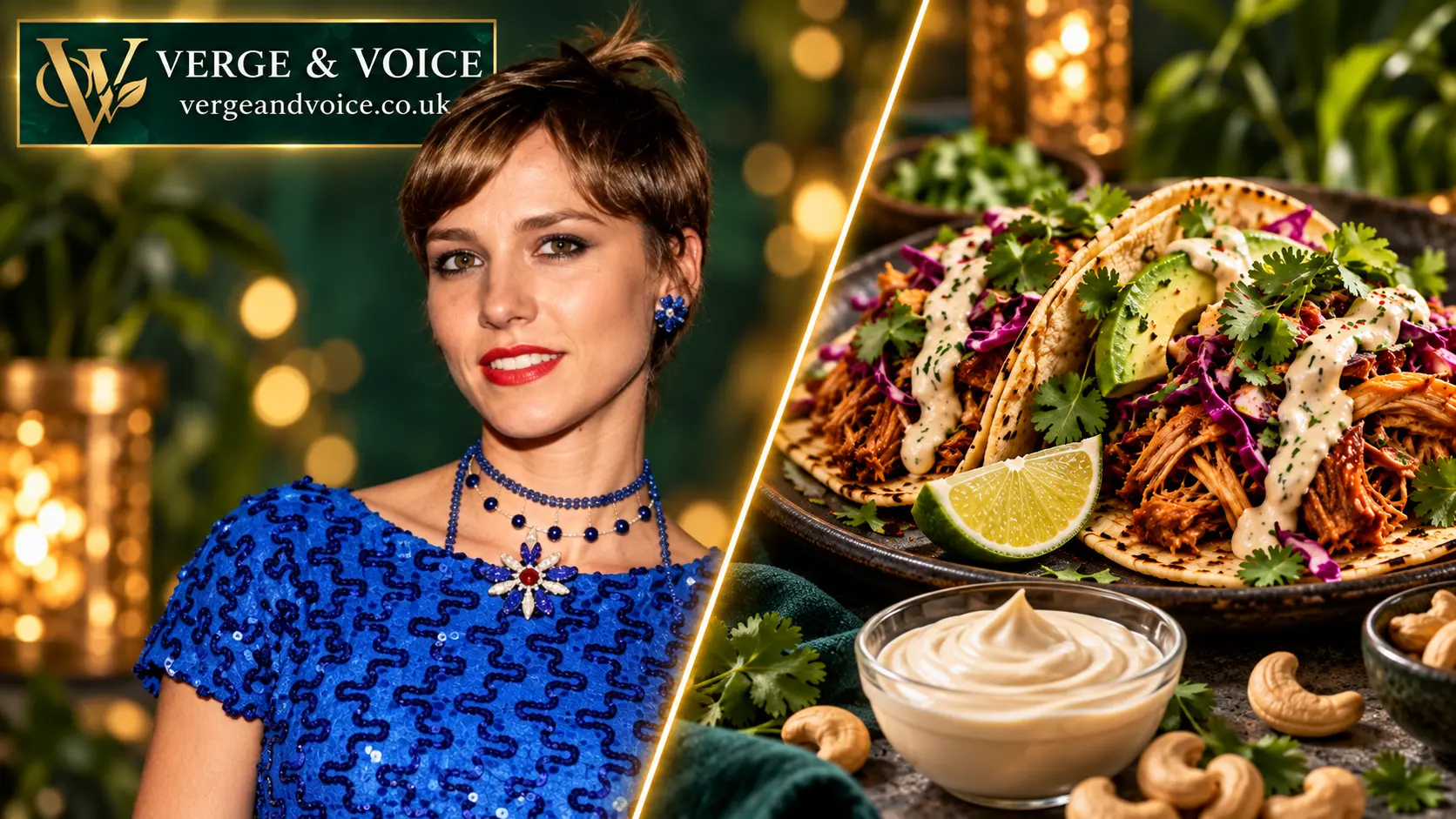
Heidi Van Pelt is a vegan chef and food entrepreneur whose public history includes a relationship with former child actor Taran Noah Smith, the cashew-based food venture Playfood, and Kansas City restaurant Füd. Their 2001 wedding ceremony brought her widespread attention, but it provides only part of the answer to who she is.
The more revealing story is about food: developing dairy alternatives, testing recipes through small dining events, and turning familiar comfort dishes into vegan meals. Contemporary reporting documents that work far more clearly than many online biographies suggest.
There are also important limits. The couple’s breakup involved competing legal filings, Füd closed in 2017, and the sources reviewed do not establish her current occupation or finances. Understanding her means putting those facts together without filling the gaps with gossip.
Quick Facts
| Field | Details |
|---|---|
| Public name | Heidi Van Pelt |
| Name in restaurant coverage | Heidi Van Pelt-Belle or Heidi VanPelt-Belle |
| Documented work | Vegan cooking, food entrepreneurship, restaurant ownership |
| Former partner | Taran Noah Smith |
| Wedding ceremony | April 27, 2001, according to contemporary reporting |
| Relationship breakdown | Divorce and annulment requests reported in 2007 |
| Food ventures | Playfood and Füd |
| Füd location | Kansas City, Missouri |
| Restaurant timeline | Stand-alone restaurant opened in 2010; closure reported in 2017 |
| Current work and net worth | Not established by the reliable sources reviewed |
The historical details above come from contemporary reporting; current personal details remain unverified.
Who Is Heidi Van Pelt?
The most useful description is a vegan food entrepreneur who became publicly associated with a television actor. Her restaurant work is documented through opening reports, interviews, professional criticism, and customer accounts.
Those sources matter because they show her doing something specific. They identify dishes, describe a dining room, and record her explanations of the food. That is stronger evidence of a culinary career than a biography that merely lists “chef” beneath a photograph.
Her name also appears in different forms. Kansas City food coverage often uses Van Pelt-Belle or VanPelt-Belle. Readers researching her work should recognize those variations rather than assume that every differently formatted name belongs to another person.
This profile treats the relationship and the food businesses as connected chapters. Neither alone explains the full public record. The relationship explains the national attention; the restaurant coverage explains what she actually made and served.
Her Background Before the National Headlines
A 2007 interview-based feature in The Pitch describes a varied early path: fashion studies, university coursework, production work, and a later move into vegan cooking. It also reports nutrition counseling and a radio program called Raw Health. Those details are attributed reporting, not independently inspected educational or professional records.
The distinction is useful. Studying a subject does not prove someone graduated in it. Likewise, reported nutrition counseling should not automatically become a claim that she held a regulated clinical qualification.
What this background suggests is experimentation across several creative fields. My reading is that food eventually offered a practical way to combine those interests: making a product, presenting it attractively, and building an experience around it.
That interpretation does not require an invented childhood calling or a polished success narrative. People can arrive at a profession through an uneven route. In this case, the later restaurant record provides firmer evidence of the work than generalized claims about early ambition.
The Connection to Taran Noah Smith
Smith played Mark Taylor, the youngest son in Home Improvement, which ended in 1999. That familiar childhood role helps explain why his personal decisions drew attention afterward. Readers remembered the character even as the actor was moving into a different life.
People’s retrospective coverage also describes his dispute with his parents over earnings from his acting years. It notes that his parents denied his allegations. That disagreement belongs to Smith’s history and should not be rewritten as evidence about Van Pelt’s motives.
An April 2002 news report published by the Midland Daily News identified Van Pelt as his wife and discussed their plans for packaged organic foods. It is useful contemporary evidence that a food venture was part of their public plans early on, rather than a detail added by later biographies.
However, an announced plan is not the same as a completed business. The report establishes what they were discussing at that time. It does not prove that every proposed project, building purchase, or production venture subsequently happened.
What the Marriage and Breakup Timeline Actually Shows
The Pitch reports that the pair held a wedding ceremony in Topeka on April 27, 2001, when Smith was 17. It also reports that a California judge rejected the marriage in the context of his attempt to obtain early access to his trust.
Its April 2007 account describes Van Pelt seeking divorce in early February and Smith’s attorney subsequently seeking annulment. Without the final court order, a filing date should not be presented as the confirmed date of a completed divorce.
IMDb compresses the relationship into an April 2001–February 2007 marriage entry. That is convenient database shorthand, but it does not resolve the more detailed legal questions raised by contemporaneous reporting.
For readers, the practical answer is straightforward: they were publicly described as married, their relationship ended, and the breakup generated legal proceedings. The exact legal sequence deserves careful wording.
It would be easy to make this section more dramatic by assigning blame. It would also make the article less reliable. Competing accounts of a separation establish that a dispute existed; they do not automatically establish whose interpretation was correct.
Playfood and the Cashew-Based Cheese Venture
Playfood gives the relationship a business dimension that a celebrity-only account misses. Go Dairy Free’s coverage identifies Smith and Van Pelt with a cashew-based cheese developed alongside their vegan catering work.
The publication describes a product range intended to fill several dairy-related roles: cheddar-style cheese, a spicy nacho alternative, a cream-cheese substitute, and a sour-cream alternative. Its report also describes squeeze-bottle packaging.
That product format helps explain the idea. Rather than treating a dairy alternative as a single block of cheese, the range addressed sauces, spreads, toppings, and familiar meal components.
My assessment is that this is the most interesting part of Playfood’s concept: it tried to preserve the convenience and enjoyment associated with dairy foods while changing the ingredients.
However, product descriptions are historical. The same Go Dairy Free page includes an update saying Playfood dissolved. It should not be read as a current buying guide or proof that those products remain available.
A biography also should not turn a promising product into an unsupported financial success. Documented development and publicity are meaningful achievements, but they do not establish revenue, profitability, or personal wealth.
How Füd Developed in Kansas City
The clearest account of Füd’s beginnings is The Pitch’s April 23, 2010 opening report. It identifies Van Pelt-Belle as chef-owner of the new restaurant at 813 West 17th Street in Kansas City.
The article describes earlier dining events in private homes and a period operating from the back of Bad Seed’s downtown market. Those events gave her somewhere to try recipes and develop a local following before opening a permanent restaurant.
At launch, the menu included meatless tacos, lasagna, and chicken-fried steak. It combined raw preparations with other vegan dishes. The report also records her interest in making familiar childhood foods vegan.
This progression offers a useful business lesson, although it is an interpretation rather than a claim she made: smaller events can help a cook learn what people enjoy before committing to a full restaurant.
They also let customers experience the food directly. For a product category that may be unfamiliar, tasting a satisfying meal can communicate more than an explanation of its ingredients.
Füd’s opening therefore deserves attention as a documented professional milestone, independently of the marriage that made her name recognizable.
What Made Her Cooking Distinctive?
Charles Ferruzza’s July 2010 review describes a colorful restaurant with an open kitchen and a menu centered partly on meatless Mexican-style dishes. His examples include a jackfruit chalupa, a rice-and-mushroom tostada, and a tofu sandwich.
The review also describes her cashew cheese and cashew-milk soft-serve dessert. Its response was not uniformly positive: Ferruzza enjoyed several dishes but criticized a brownie and parts of the ordering experience.
That balance makes the review valuable. It documents an actual dining experience rather than functioning as a promotional biography.
The culinary approach, as I interpret it, was to give diners familiar reasons to enjoy a meal: richness, seasoning, texture, and recognizable dishes. A chalupa or sandwich offers an accessible starting point even when the filling is unfamiliar.
This does not establish that she invented jackfruit cooking or cashew cheese. Such a claim would require a much broader historical investigation. The supported point is that these ingredients featured in her restaurant’s documented menu.
Her work is more accurately understood through those specific applications than through a vague label such as “wellness pioneer.”
How Local Critics and Diners Responded
KCUR’s November 2010 food-critics notes included Füd among local recommendations. They highlighted its vegan menu, unusual meat alternatives, chalupa, leafy wraps, and spicy tofu sandwich.
An August 2010 KCUR segment also listed the restaurant’s cashew ice cream among notable local desserts. Together, these references show that the restaurant attracted attention for both savory food and sweets.
They do not prove universal approval. A critic’s recommendation records a favorable assessment at a particular time; it is not an award, a nutritional endorsement, or a guarantee of consistent service.
HappyCow’s archived customer reviews add another perspective. Diners discussed jackfruit sandwiches, nachos, desserts, and the breadth of the menu. Some praised the food while others mentioned waiting times or service concerns.
These are individual experiences, not independently verified findings. Their useful contribution is narrower: they show what customers noticed and discussed during the restaurant’s operating years.
Taken together, the professional and customer material gives the career chapter substance. It shows a business that people visited, evaluated, and remembered for particular dishes.
Why Füd’s Closure Needs Careful Explanation
The Pitch reported Füd’s closure in August 2017, after approximately seven years as a stand-alone restaurant. Its account describes conflict involving Van Pelt, employees, and her business partner.
The reporting includes allegations from former staff and responses from Van Pelt, who disputed their characterization and described problems with management. Her partner also discussed the breakdown of their business relationship.
The supported conclusion is that the closure occurred amid serious disagreements. Reducing it to a single accusation would omit the competing accounts.
Nor does a restaurant’s closure, by itself, tell us everything about its food or its financial history. Those are separate questions. A dining review evaluates a meal; closure reporting examines an event and the disputes surrounding it.
For anyone reading an older recommendation, there is a practical consequence: it is historical restaurant coverage. HappyCow now marks the listing closed. Archived praise should not be mistaken for evidence that the dining room is still operating.
Her Later Family Life and What Remains Private
The July 2010 Pitch review identifies Jerimiah Rozzo-Belle as Van Pelt-Belle’s second husband and reports that they had a young child together. That establishes a later family chapter beyond Smith.
By the 2017 closure report, Rozzo was described as her ex-husband and business partner. The differing descriptions reflect reports from different years, so the earlier relationship label should not be carried forward as a current fact.
The same care applies to children. Information about a child with a later partner must not be reassigned to the relationship with Smith.
Beyond those dated reports, the sources reviewed do not establish her current relationship status, household, or daily life. There is no need to turn that absence into a story about hiding, disappearing, or deliberately withdrawing.
A person can have a documented public past without having a publicly documented present. A reliable biography should allow that gap to remain.
Where Is Heidi Van Pelt Now?
As of October 2, 2026, reliable recent reporting reviewed for this article does not establish her present occupation or a current restaurant venture.
The best-supported answer is historical: her public career includes vegan food development, Playfood, and Füd. The restaurant’s 2017 closure is documented; a new career chapter has not been verified here.
The same limitation applies to net worth. Business ownership, celebrity association, and publicity do not supply enough information to calculate personal wealth. A credible figure would need evidence about assets, liabilities, ownership interests, and income.
Exact birthday and age claims also appear in online profiles, but this article does not treat repetition as confirmation. Where stronger evidence is unavailable, leaving out a precise personal detail is preferable to giving readers false certainty.
These limits are part of the answer. They tell readers where the documented history ends.
The Fairest Assessment of Her Public Story
My view is that Van Pelt’s food career deserves a larger place in her biography because it offers concrete, independently described work: products, menus, a restaurant opening, and critical responses.
That does not mean replacing an uncomfortable relationship history with an uncomplicated success story. Both the legal disputes and the restaurant’s troubled ending belong in the record.
The useful approach is proportional. Explain the relationship that brought attention, examine the work that followed, and distinguish dated reporting from present-day knowledge.
Heidi Van Pelt emerges from that approach as a food entrepreneur with a substantial documented restaurant chapter and significant gaps in the public record. Readers gain more from understanding those boundaries than from another confident biography built around unverified personal details.